
Exhaust systems are among the most critical components of vehicles, industrial machines, and power equipment. They manage the flow of gases, reduce emissions, and optimize performance. The durability, efficiency, and reliability of an exhaust system heavily depend on the choice of exhaust materials. These materials must withstand extreme heat, constant vibration, chemical exposure, and mechanical stress. From stainless steel and aluminum to titanium and advanced composites, each material plays a vital role in designing exhaust systems tailored for specific industries.
This detailed guide examines exhaust materials in depth, exploring their properties, advantages, limitations, applications, and future trends that define modern exhaust system design.
What Are Exhaust Materials?
Exhaust materials are metals, alloys, or composites used to construct components of an exhaust system, including:
- Exhaust manifolds
- Pipes and tubing
- Catalytic converters
- Mufflers and resonators
- Exhaust tips
These materials must balance multiple requirements:
- Heat Resistance: Endure high temperatures without warping or cracking.
- Corrosion Resistance: Prevent degradation from road salts, condensation, and chemical exposure.
- Strength and Durability: Handle vibrations and mechanical stresses.
- Weight Considerations: Affect performance and efficiency.
- Fabrication Suitability: Easy to bend, weld, or machine.
Common Exhaust Materials
1. Stainless Steel
Stainless steel is the most widely used material in modern exhaust systems due to its balance of performance and longevity.
Advantages:
- Excellent resistance to heat and corrosion.
- Long service life, even under harsh conditions.
- Available in different grades (304, 409, 316) for specific applications.
- Easy to fabricate with welding and bending techniques.
Limitations:
- Heavier than aluminum or titanium.
- Higher cost compared to mild steel.
Applications: Automotive exhausts, industrial generators, marine exhaust systems.
2. Mild Steel
Mild steel was traditionally used in exhaust systems due to its affordability.
Advantages:
- Inexpensive compared to stainless steel.
- Easy to bend and weld.
- Strong under mechanical stress.
Limitations:
- Prone to rust and corrosion.
- Shorter lifespan compared to stainless steel.
- Requires protective coatings.
Applications: Budget vehicles, older exhaust designs, temporary systems.
3. Aluminum
Aluminum is increasingly used in certain exhaust components and tubing.
Advantages:
- Lightweight, reducing overall vehicle mass.
- Good thermal conductivity, helping dissipate heat.
- Resistant to corrosion when anodized.
- Cost-effective for weight-conscious designs.
Limitations:
- Lower melting point compared to stainless steel.
- Less durable in extremely high-temperature conditions.
Applications: Exhaust tubing, performance vehicles, aerospace exhausts.
4. Titanium
Titanium is considered one of the premium exhaust materials for high-performance and racing applications.
Advantages:
- Very high strength-to-weight ratio.
- Superior corrosion resistance.
- Withstands extreme temperatures.
- Significantly lighter than stainless steel.
Limitations:
- Very expensive.
- More challenging to machine and weld.
Applications: Racing exhaust systems, aerospace, high-performance motorcycles, sports cars.
5. Inconel (Nickel-Chromium Alloy)
Inconel is an advanced superalloy used in specialized exhaust systems.
Advantages:
- Exceptional resistance to heat and oxidation.
- Maintains strength under extreme conditions.
- Long service life.
Limitations:
- Extremely costly.
- Complex to manufacture.
Applications: Formula 1 exhausts, aerospace propulsion systems, military applications.
6. Ceramic-Coated Materials
Ceramic coatings are applied to exhaust components made from steel or aluminum.
Advantages:
- Enhances heat resistance.
- Protects against corrosion.
- Improves thermal management by keeping heat inside pipes.
Limitations:
- Coating can chip or wear over time.
- Requires skilled application.
Applications: Exhaust headers, turbo manifolds, performance exhaust systems.
7. Cast Iron
Historically used in exhaust manifolds.
Advantages:
- Very strong and durable.
- Handles high heat without deformation.
- Cost-effective for mass production.
Limitations:
- Very heavy.
- Brittle, prone to cracking under vibration.
- Rusts without protective coating.
Applications: OEM exhaust manifolds, heavy machinery.
Properties of Exhaust Materials
When choosing exhaust materials, engineers consider the following properties:
- Thermal Resistance: Ability to handle exhaust gases exceeding 800°C.
- Corrosion Resistance: Resistance to oxidation, moisture, and road salts.
- Strength: Durability against constant vibration and pressure fluctuations.
- Weight: Affects vehicle handling and efficiency.
- Fabrication: Ease of bending, welding, and machining.
Stainless Steel Grades for Exhaust Systems
Different grades of stainless steel are used in exhaust manufacturing:
| Grade | Properties | Applications |
|---|---|---|
| 304 | High corrosion resistance, durable, weldable | Performance exhausts, marine systems |
| 409 | Affordable, good heat resistance, lower corrosion resistance | OEM automotive exhausts |
| 316 | Superior corrosion resistance due to molybdenum | Marine exhausts, chemical environments |
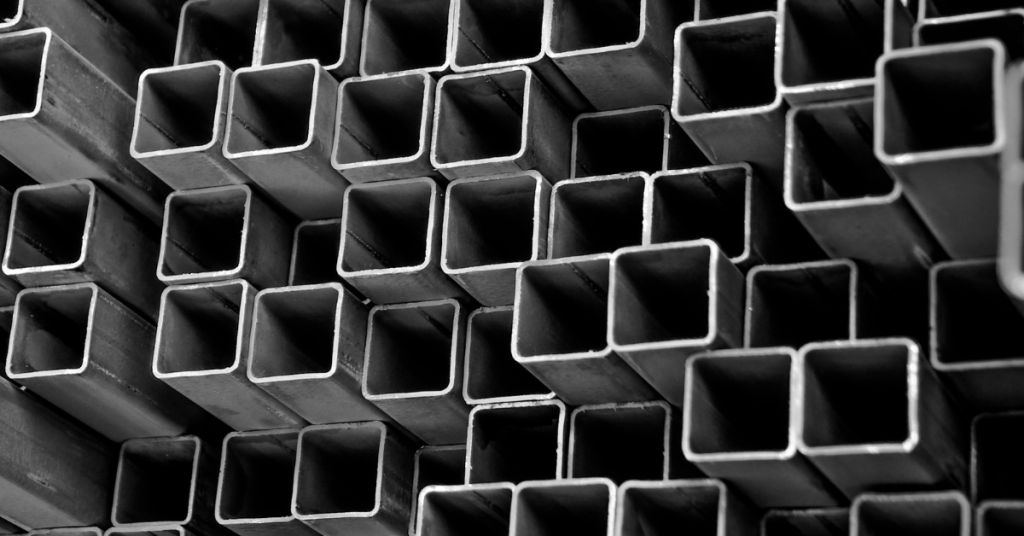
Exhaust System Components and Materials
Exhaust Manifold
- Cast Iron: Durable and heat-resistant.
- Stainless Steel: Lightweight and efficient in performance systems.
Exhaust Piping
- Aluminum Tubes: Lightweight for performance.
- Stainless Tubes: Stronger, more durable.
Mufflers and Resonators
- Stainless Steel: Longevity and resistance to heat.
- Mild Steel: Cost-effective but less durable.
Catalytic Converters
- Stainless Steel Housing: Protects ceramic or metallic cores.
- High-Temp Alloys: Support long-term heat exposure.
Advantages of Stainless Steel Exhaust Materials
Stainless steel dominates the industry due to:
- Long service life.
- High resistance to rust and corrosion.
- Balance of cost and durability.
- Availability in multiple grades.
- Adaptability across automotive, marine, and industrial applications.
Challenges in Exhaust Material Selection
- Cost vs. Performance: Premium materials like titanium and Inconel are not feasible for mass-market vehicles.
- Heat Management: Materials must dissipate or retain heat as required.
- Weight Balance: Heavier materials reduce efficiency.
- Environmental Concerns: Recycling and sustainability are critical in modern design.
Applications Across Industries
Automotive
- Passenger Vehicles: Stainless steel and mild steel dominate.
- Performance Cars: Titanium and aluminum for lightweight exhausts.
- Motorcycles: Titanium and stainless for compact, high-heat systems.
Aerospace
- Jet Engines: Inconel and titanium for superior heat resistance.
- Spacecraft: Advanced alloys for propulsion systems.
Marine
- Ships and Boats: Stainless steel and 316-grade alloys for saltwater resistance.
Industrial
- Generators: Cast iron and stainless for durability.
- Heavy Equipment: Mild steel with coatings for cost efficiency.
Case Study: Titanium Exhaust in Supercars
A luxury sports car manufacturer replaced stainless steel exhaust systems with titanium to reduce weight and enhance performance. The results:
- Weight Reduction: Exhaust system weight dropped by 40%.
- Heat Resistance: Withstood extreme engine temperatures without failure.
- Performance Gains: Improved acceleration and efficiency.
Though costly, titanium proved ideal for performance-focused applications.
Future Trends in Exhaust Materials
- Hybrid Designs: Combining stainless steel with titanium or composites.
- Additive Manufacturing (3D Printing): Creating lightweight, optimized structures.
- Recycling-Friendly Materials: Sustainable alloys that reduce environmental impact.
- Ceramic Composites: Greater use for extreme heat environments.
- Electrification Adaptations: EVs may not use traditional exhausts, but fuel-cell vehicles will require advanced exhaust-like systems.
Sustainability in Exhaust Materials
- Recycling Stainless Steel: Most stainless exhausts are recyclable.
- Lightweight Materials: Reduce fuel consumption, lowering emissions.
- Eco-Coatings: Environmentally friendly coatings replacing harmful chemicals.
Maintenance of Exhaust Materials
- Regular Inspection: Look for rust, cracks, and leaks.
- Protective Coatings: Apply ceramic or anti-rust coatings to prolong lifespan.
- Proper Installation: Prevents stress cracks and premature failure.
- Cleaning: Remove road salts and debris to prevent corrosion.
Conclusion
Exhaust materials form the foundation of reliable, efficient, and long-lasting exhaust systems. Stainless steel remains the industry standard, offering the perfect balance of cost, durability, and corrosion resistance. Titanium and Inconel push the boundaries of high-performance systems, while aluminum and mild steel provide budget-friendly alternatives.
As industries evolve, the choice of exhaust materials will increasingly focus on sustainability, recyclability, and performance optimization. Whether in passenger vehicles, racing cars, marine systems, or aerospace applications, the future of exhaust design will be shaped by innovation in material science and manufacturing technology, ensuring stronger, lighter, and more efficient systems for decades to come.